
Stroke
Stroke physiotherapy focuses on restoring movement, improving muscle strength, and enhancing coordination to help patients regain independence in daily activities. It plays a crucial role in post-stroke rehabilitation by addressing mobility impairments and preventing complications.
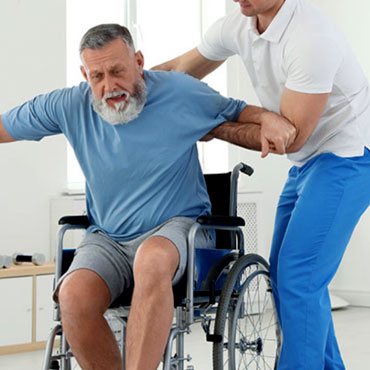
Key Aspects of Stroke Physiotherapy:
- Comprehensive Assessment: Evaluates muscle strength, balance, coordination, and functional abilities. Identifies affected limbs and movement limitations.
- Early Mobilization & Bed Exercises:
Prevents complications like bedsores, joint stiffness, and muscle atrophy.
Includes passive movements, stretching, and positioning techniques. - Balance & Coordination Training:
Helps regain control over body movements and reduces fall risk.
Includes weight shifting, core stability exercises, and standing balance training. - Gait Training & Walking Assistance:
Improves walking ability with parallel bars, walkers, or crutches.
Focuses on proper foot placement and weight-bearing techniques. - Strengthening & Stretching Exercises:
Strengthens weak muscles and improves joint flexibility.
Targets arms, legs, trunk, and core muscles for better control. - Neuroplasticity & Functional Retraining:
Encourages the brain to relearn lost functions through repetitive movements.
Task-Specific Training: Practicing daily activities like gripping, lifting, or stepping. - Electrotherapy & Assistive Devices:
TENS & Functional Electrical Stimulation (FES): Helps stimulate weak muscles.
Splints & Braces: Supports weak limbs and prevents deformities. - Spasticity & Contracture Management: Manual therapy, stretching, and positioning techniques to reduce muscle tightness.
- Cognitive & Sensory Training:
Improves memory, attention, and sensory awareness.
Mirror Therapy & Sensory Stimulation: Enhances limb function. - Home Exercise Program & Caregiver Training:
Personalized exercises for continuous recovery.
Educates family members for better patient support and safety.
Stroke physiotherapy plays a vital role in enhancing mobility, improving independence, and preventing long-term disabilities in stroke survivors.